rachelmanija: (Books: old)
[personal profile] rachelmanija


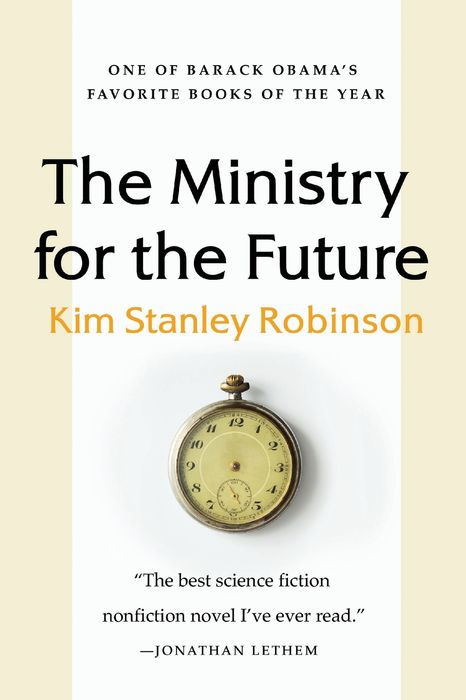
After a wet-bulb heat wave kills thousands in India, the UN forms an organization, the Ministry for the Future, intended to deal with climate change on behalf of future generations. They're not the only organization trying mitigate or fight or adapt to climate change; many other people and groups are working on the same thing, using everything from science to financial incentives to persuasion to terrorism.

We very loosely follow two very lightly sketched-in characters, an Irish woman who leads the Ministry for the Future and an American man whose life is derailed when he's a city's sole survivor of the Indian wet-bulb event, but the book has a very broad canvas and they're not protagonists in the usual sense of the word. The book isn't about individuals, it's about a pair of phenomena: climate change and what people do about it. The mission to save the future is the protagonist insofar as there is one.

This is the first KSR book I've actually managed to finish! (It's also the only one that I got farther in than about two chapters.) It's a very interesting, enlightening, educational book. I enjoyed reading it.

He's a very particular kind of writer, much more interested in ideas and a very broad scope than in characters or plot. That approach works very well for this book. The first chapter, which details the wet-bulb event, is a stunning, horrifying piece of writing. It's also the closest the book ever comes to feeling like a normal kind of novel. The rest of it is more like a work of popular nonfiction from an alternate timeline, full of science and economics and politics and projects.

I'm pretty sure Robinson researched the absolute cutting edge of every possible action that could possibly mitigate climate change, and wrote the book based on the idea of "What if we tried all of it?"

Very plausibly, not everything works. (In a bit of dark humor, an attempt to explain to billionaires why they should care about other people fails miserably.) Lots of people are either apathetic or actively fighting against the efforts, and there's a whole lot of death, disaster, and irreparable damage along the way. But the project as a whole succeeds, not because of any one action taken by any one group, but because of all of the actions taken by multiple groups. It's a blueprint for what we could be doing, if we were willing to do it.

The Ministry for the Future came out in 2020. Reading it now, its optimism about the idea that people would be willing to pull together for the sake of future generations makes it feel like a relic from an impossibly long time ago.

Stones

Dec. 10th, 2025 09:09 pm
nineweaving: (Default)
[personal profile] nineweaving
A week ago, I was visiting an old friend on the edge of the Berkshires, at her central-chimneyed, chestnut-framed, wide-boarded house, coeval with the Boston Tea Party. It was just after the first of December and there was deepish snow, so I had “Sweet Baby James” running through my head. Sadly, we couldn’t go play in it or even slip out to look at the Milky Way on a crystal-clear night, as the temperature was about 0F, with a fierce wind banging in the chimneystack. We would have been slashed to stiff ribbons in an instant.

So we stayed in and looked at her cabinet of curiosities. She’s always had one: leaves and pinecones; playing cards and antique marbles; Qing china. Now her passion is for pocket stones. They are jade, lapis, jasper, malachite, pyrite, hematite, and quartz—oh, and hundreds more I couldn’t name, though she can. They are striped, starred, clouded, marbled; they are tabbied, tessellated, blackworked, eyed and islanded and archipelagoed like antique globes of exoplanets; they’re like phoenix eggs. She has Archaean banded rocks three billion years old, and a little heap of unset opals, flickering with inward fire. It’s all about the pattern and the play of light. She kindly gave me two Nine-colored opals for my birthday. They are tiny—pinky-nail and pomegranate-seed—but they flash with momentary Pleiades.

Nine
rachelmanija: (Books: old)
[personal profile] rachelmanija


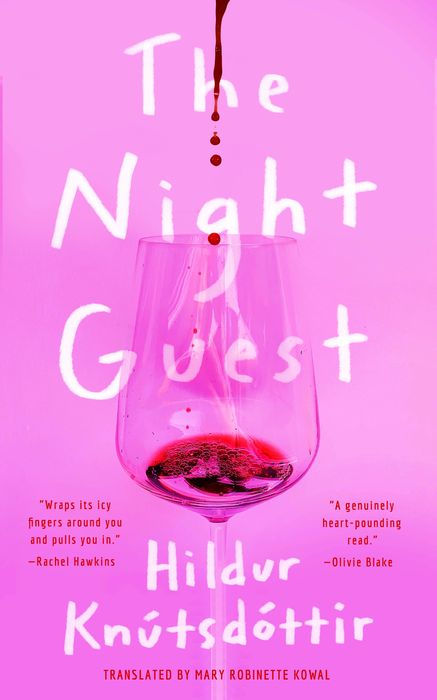
An Icelandic horror novella translated by Mary Robinette Kowal! I had no idea she's fluent in Icelandic.

Iðunn experiences unexplained fatigue and injuries when she wakes up, but is gaslit by doctors and offered idiotic remedies by co-workers. (Very relatable!) Meanwhile, she's being semi-stalked by her ex-boyfriend/co-worker, her parents refuse to accept that she's a vegetarian and keep serving her chicken, and the only living beings she actually likes are the neighborhood cats that she's allergic to.

After what feels like an extremely long time, it finally occurs to her that she might be sleepwalking, and some time after that, it finally occurs to her to video herself as she sleeps. At that point some genuinely scary/creepy/unsettling things happen, and I was very gripped by the story and its central mystery.

Is Iðunn going out at night and committing all the acts she's normally too beaten down or scared to do while sleepwalking or dissociating? Is she having a psychotic break? Is she a vampire? Is she possessed? Does it have something to do with a traumatic past event that's revealed about a third of the way in?

Other than the last question, I have no idea! The ending was so confusing that I have no idea what it was meant to convey, and it did not provide any answers to basically anything. I'm also not sure what all the thematic/political elements about the oppression of women had to do with anything, because they didn't clearly relate to anything that actually happened.

Spoilers!

Read more... )

This was a miss for me. But I was impressed by the very fluent and natural-sounding translation.

Content note: A very large number of cats are murdered. Can horror writers please knock it off with the dead cats? At this point it would count as a shocking twist if the cat doesn't die.
rachelmanija: (Books: old)
[personal profile] rachelmanija


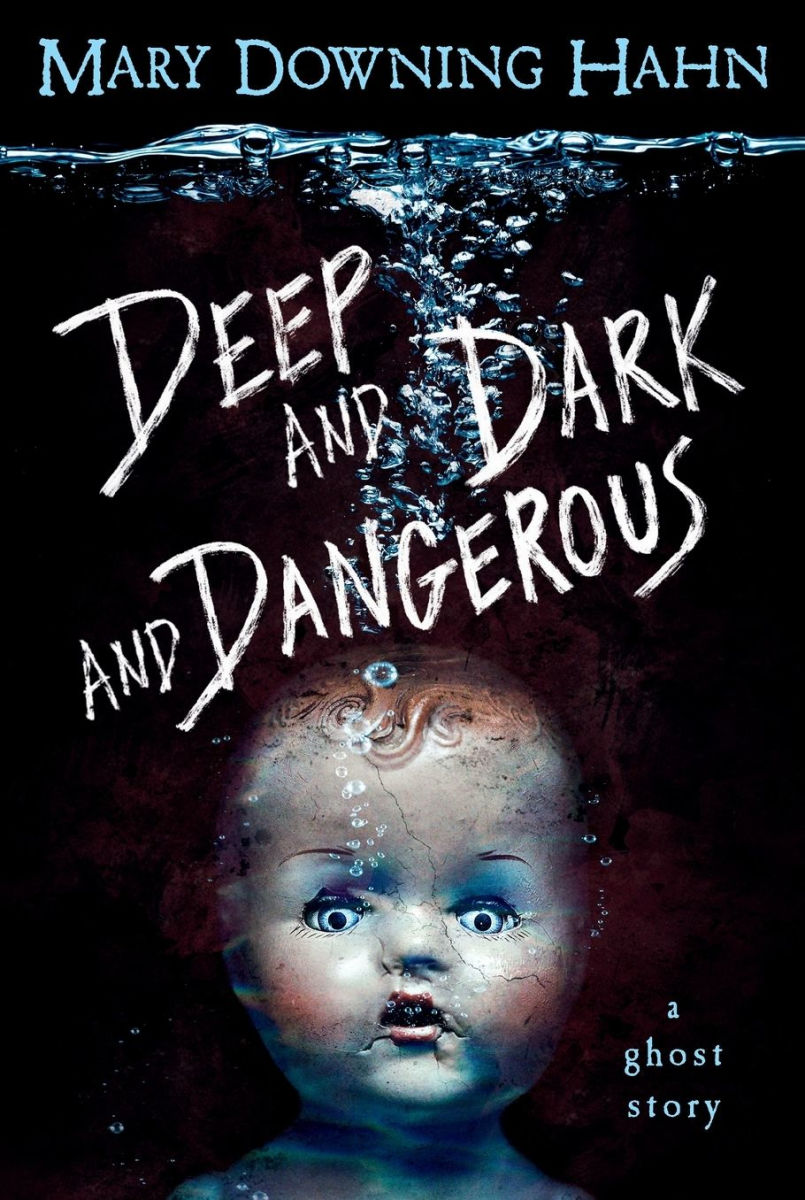
Thirteen-year-old Ali gets a chance to spend the summer with her aunt Dulcie and five-year-old cousin Emma at the family's long-abandoned lakefront property - over the strong objections of Ali's mother, who hates the lake. Ali is delighted to babysit Emma and get out from under her mom's over-protective thumb. But why do both her mother and Dulcie act so weird about the lake and their past there? Who's the mysterious girl who was ripped out of old family photos? And what's up with Sissy, the strange girl who hangs out at the lake and encourages Emma to behave badly and blame it on Ali?

Sissy's real identity won't come as a surprise to any readers over the age of 10, but there are some genuinely chilling moments and Hahn's trademark realistic family dynamics and exploration of guilty secrets and how parents' childhood trauma gets passed down to their children. I actually got stressed out reading about Ali trying to protect Emma while Dulcie blames Ali for all the weird stuff going on and accuses Ali of refusing to take responsibility for anything. (In fact, Dulcie and Ali's mom are the ones who are failing to take responsibility and projecting it on the kids.)

A good solid middle-grade ghost story with unusually complex family dynamics.
rachelmanija: (Books: old)
[personal profile] rachelmanija


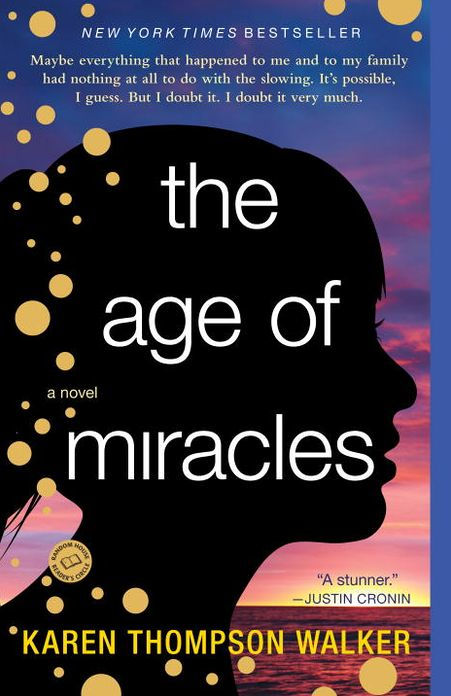
A sensitive, well-written novel about a young girl coming of age at the end of the world. 11-year-old Julia lives in California suburbs with her doctor dad and fragile mom when the Earth's rotation begins to slow, and gradually gets slower and slower and slower.

Days and nights stretch out. Birds fall from the sky. Some people become severely ill, apparently from disruption of circadian rhythms. Crops fail. But life goes on, and Julia experiences all the ordinary milestones - a first love, her parents' marriage breaking up, becoming more independent - against a backdrop of larger loss and change. It

This is an apocalypse novel almost entirely without violence, apart from some light persecution of a scapegoated neighbor. There's some death, but it's all from natural or accidental causes. It's science fiction but marketed as literary fiction, and feels a lot more like the latter. The book has that melancholy, nostalgic, sepia vibe of looking back on times when you knew something was wrong but were young enough to be focused mostly on yourself, and knowing you'll never be that innocent ot experience the same time or world again.

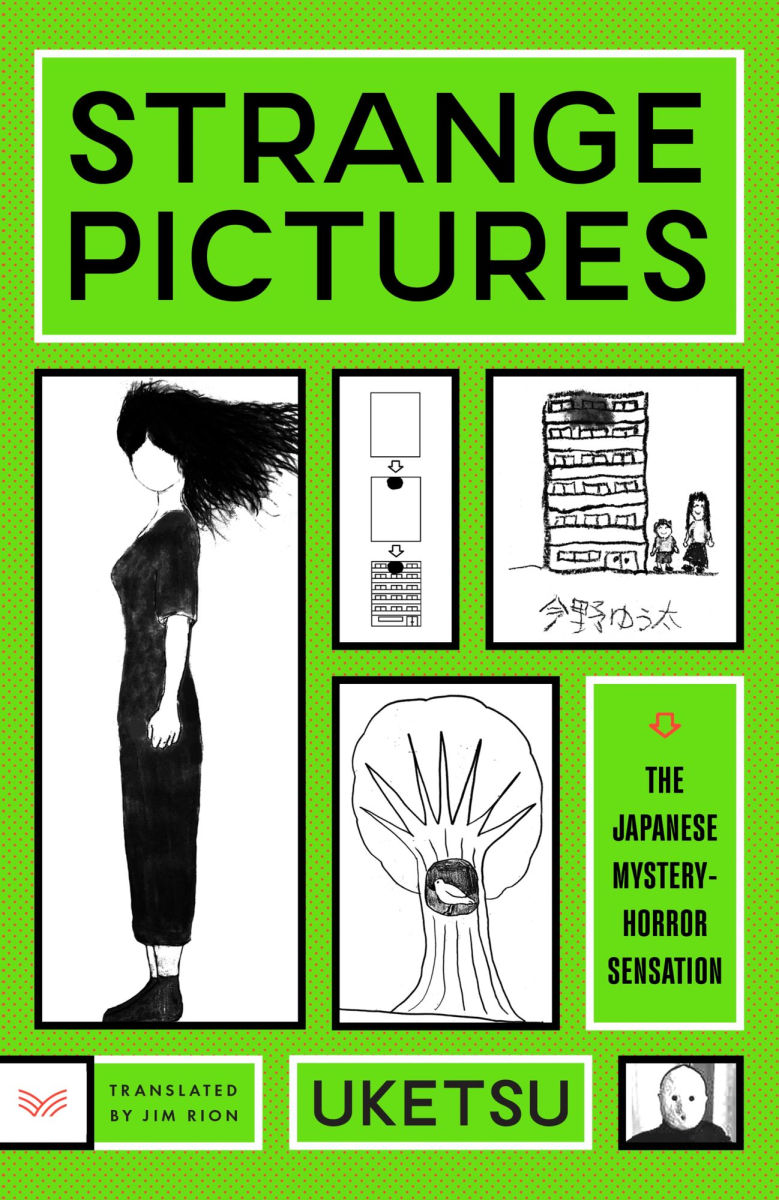
Strange Pictures, by Uketsu

Dec. 1st, 2025 01:09 pm
rachelmanija: (Books: old)
[personal profile] rachelmanija


Another mystery with light horror/urban legend elements and a heavy use of images by the mysterious and pseudonymous Uketsu. If you like creepypasta, you will like this.

An abandoned blog with sketches of a woman's future child may reveal a horrifying secret. A child's drawings of his apartment building worry his teacher. A mountaintop murder has a clue in a sketch by the murder victim. How do the images reveal the solutions? Are these three weird stories related?

I enjoyed this very much. It's exactly as fun and bonkers as the first Uketsu book I read, Strange Houses, but feels more confident and assured. It also reads more like a normal novel, with actual scenes rather than solely relying on interviews and exposition.

I'm excited to read his next two books (forthcoming in English) Strange Buildings (originally published in Japanese as Strange Houses 2, which the translator says is more dark/disturbing than the first two) and Strange Maps, which the translator says is more of a classic mystery.

Content notes: Child abuse, animal in danger, brief but graphic violence.

Spoilers!

Read more... )
Page generated Dec. 14th, 2025 09:39 pm
Powered by Dreamwidth Studios